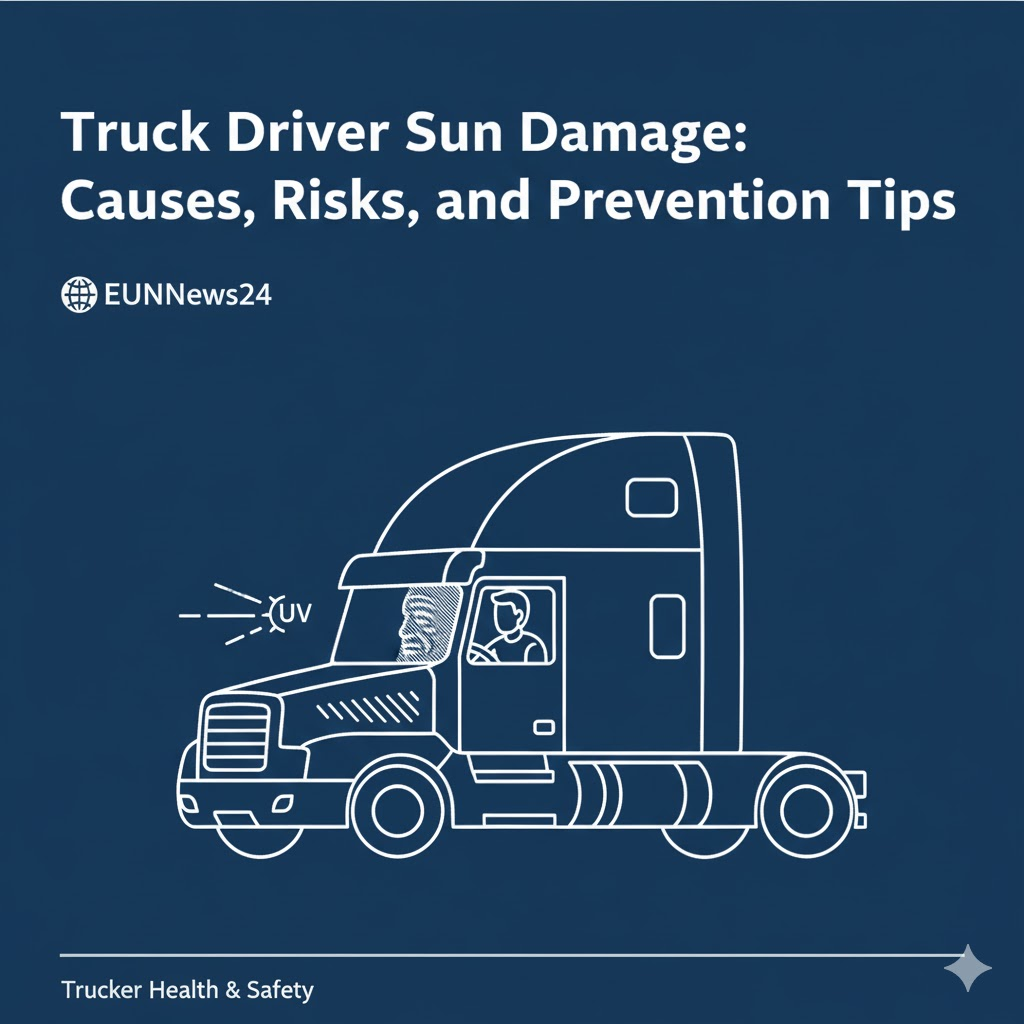
Understanding Sun Damage in Truck Drivers
If you spend your days behind the wheel, you already know the sun can be relentless—especially on the driver’s side. Truck driver sun damage happens because UVA and UVB radiation reach your skin for hours through glass and reflections, accelerating skin aging, raising skin cancer risk, and drying you out. Windshields generally block most UVB (the “burning” rays), but UVA rays—the deeper-penetrating kind linked to premature aging and cancer—can pass through side windows unless you upgrade the glass or add film. The telltale case many derms cite is unilateral photoaging (one-sided damage) in professional drivers; it’s dramatic proof that UVA penetrates window glass and can thicken and wrinkle the exposed half of the face over time.
How Sun Exposure Affects the Skin
- UV radiation triggers DNA damage that accumulates trip after trip. UVA mostly drives collagen breakdown and wrinkles; UVB drives sunburn and direct DNA hits. Both contribute to skin cancer.
- Glass blocks most UVB, but not all UVA. Laminated windshields block high percentages of UVA; tempered side glass often blocks far less. That creates asymmetric exposure to the left side of the face/arm for left-hand-drive truckers.
- Long-term occupational exposure (drivers, road crews, farmers) correlates with higher rates of actinic keratoses and some truck driver health red flags in European and global studies.
Risks Associated with Prolonged Sun Exposure
- Skin cancer risk: basal cell and squamous cell carcinomas are most common; melanoma is less common but more dangerous. UVA transmission through side windows compounds cumulative risk.
- Premature aging: laxity, coarse wrinkling, and mottled pigmentation on the driver’s side of face/neck (classic “one-sided” photoaging).
- Eye damage & glare: UV contributes to cataracts and makes sun glare management a safety issue; this is why protective eyewear matters.
- Heat exposure risks: high cab temps and dehydration worsen fatigue and errors—pair your UV plan with hydration and heat controls.
Effective Prevention Strategies
Daily Sunscreen Application
Think of SPF as PPE for your face, neck, arms, and hands.
- Use broad-spectrum (UVA/UVB) sunscreen SPF 30+ every day, even “just driving.” Apply 15 minutes before you roll, and reapply every two hours (more often if sweating). Don’t forget ears, scalp edges, and lips—use SPF lip balm/lip protection spf.
- Quantity matters: about 1 oz (shot glass) to cover exposed skin; a wide brim hat won’t protect the left cheek if the sun is low on your door.
- Label check: broad spectrum, water-resistant if you perspire, and not expired. (High SPF helps, but sunscreen reapplication is what most drivers skip.)
Quick table — SPF selection by day type
| Driving pattern | UV index* | SPF & product type | Reapply |
| Overcast, mostly motorway | 2–3 | Broad-spectrum SPF 30 lotion | Every 2 h |
| Mixed clouds, urban stops | 4–6 | Broad-spectrum SPF 30–50 lotion/spray + spf lip balm | Every 2 h |
| High sun, snow/water nearby (reflection) | 7–10+ | Broad-spectrum SPF 50, water-resistant; extra on left forearm/face (reflective surface protection) | 90–120 min |
*Use WHO UV index forecasts; ≥3 means protection is advised.
SPF application tips: apply to dry skin, include neck/ears/hands, and stash a travel bottle in the door pocket. If you have thinning hair, use sunscreen on the scalp or wear a hat.
Protective Clothing and Accessories
- UV protective clothing/uv protective clothing: long-sleeve UPF shirts and driving sleeves protect forearms that ride near the window.
- Protective eyewear / sunglasses importance: choose UV-rated sunglasses to shield eyes and periocular skin; polarized lenses also cut sun glare for safer driving.
- Wide brim hat / cab sun protection: brimmed caps or legionnaire hats help when you’re out of the cab; inside, ensure they don’t block mirrors.
Vehicle Modifications for UV Protection
- UV window film / cab window protection / cab window protection: Certified films can block ≥99% of UVA/UVB on side windows without making them too dark; they fill the UVA gap that tempered glass leaves. Vehicle window tinting legality varies—front glass often has minimum light-transmission requirements (e.g., UK: windscreen ≥75% VLT; front side windows ≥70% VLT). Many drivers choose uv window film that’s nearly clear but high-UVA-blocking to stay legal.
- Standards check: in Europe, glazing must meet UNECE R43; films and privacy glass must comply with national rules layered on top of R43. Always verify local law before installation.
- Cab sun protection details: add a left-side sun visor extension; consider side curtains for breaks; keep glass clean (road film reduces visibility and increases squinting fatigue).
- Ramp-up plan: if the fleet can’t film everything at once, start with long-haul tractors on southern or coastal lanes where UV index is habitually higher.
Upgrade matrix — quick buyer’s guide
| Goal | Option | What to look for |
| Max UVA/UVB block on side glass | UV window film (clear or light tint) | Certified ≥99% UVA/UVB block; legal VLT for your country; warranty |
| All-glass solution | Laminated side windows (OEM or retrofit) | Documented UVA performance; cost/weight fit |
| Glare and heat control | Polarized sunglasses; front/side visors | UV400 rating; polarization for glare; doesn’t impede mirror use |
| Fast wins | Door-pocket SPF, hat hook, sleeve in cab | Makes on road skin care a habit |
Recognizing Early Signs of Skin Damage
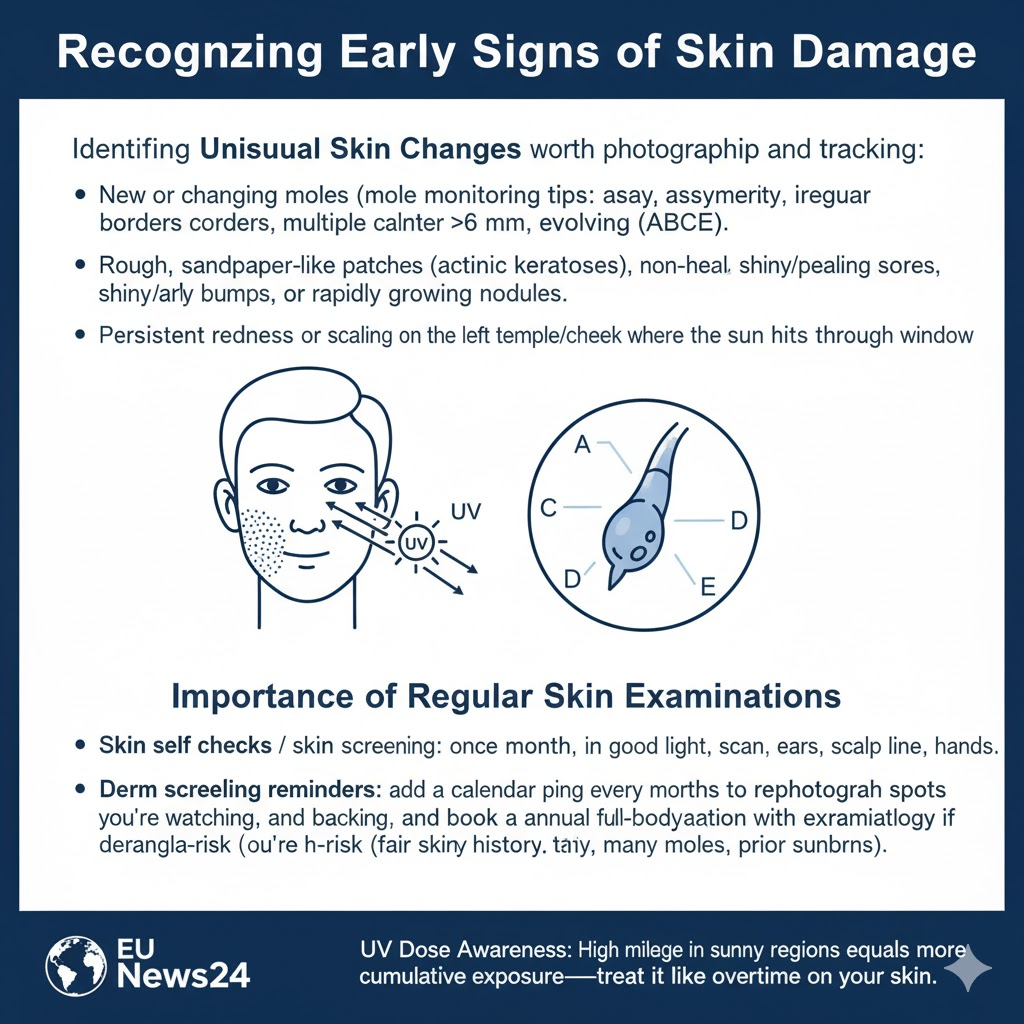
Identifying Unusual Skin Changes
Sun damage signs worth photographing and tracking:
- New or changing moles (mole monitoring tips): asymmetry, irregular borders, multiple colors, diameter >6 mm, evolving (ABCDE).
- Rough, sandpaper-like patches (actinic keratoses), non-healing sores, shiny/pearly bumps, or rapidly growing nodules.
- Persistent redness or scaling on the left temple/cheek where the sun hits through the window.
Importance of Regular Skin Examinations
- Skin self checks / skin screening: once a month, in good light, scan face, ears, scalp line, neck, forearms, hands.
- Derm screening reminders: add a calendar ping every three months to re-photograph spots you’re watching, and book an annual full-body skin examination with dermatology if you’re high-risk (fair skin, family history, many moles, prior sunburns).
- UV dose awareness: high mileage in sunny regions equals more cumulative exposure—treat it like overtime on your skin.
Seeking Professional Medical Advice
When to Consult a Dermatologist
- A new or changing lesion, a sore that won’t heal, or anything that bleeds easily needs evaluation—dermatologist referral tips: bring clear photos, note when you first saw it, and mention occupational exposure (driving hours, side-window exposure).
- If you’ve had lots of sun exposure risks (childhood burns, outdoor hobbies, high UV index routes), ask about your personal skin cancer awareness and surveillance plan.
Importance of Early Detection
Early diagnosis saves tissue and lives. Catching lesions when small means simpler treatment and less downtime—critical for truck driver wellness and keeping routes on schedule.
Field-Ready Playbook (for drivers & dispatch)
Sun safety plan (laminate this):
- Morning routine — sunscreen to face/ears/neck/forearms (skin care / truck driver skin care), pack sunscreen and spf lip balm; sunglasses loaded; water jug filled (hydration during sun).
- Cab setup — clean glass; deploy side visor; confirm UV window film (if fitted) is intact; put sunscreen in door pocket (sun safety on road).
- On the road — reapply SPF at fuel or meal stops; take shade breaks on route when possible; rotate arm position so one spot doesn’t bake all day.
- After-work — quick skin self checks in the mirror; moisturize (repair barrier); set derm screening reminders.
Truck driver health tips that help compliance and comfort:
- Mind rest stop planning so reapplication timing is natural.
- Pair SPF with idle time reduction tactics that keep cab temps humane and reduce sweat (which degrades sunscreen faster).
- Use protective eyewear even on cloudy days—UVA penetrates clouds and glass.
Why window upgrades matter (the science in one minute)
- Windshields (laminated) typically block the vast majority of UVA; side windows (tempered) often do not. That’s why left-side photoaging is common in professional drivers. Adding uv window film or laminated side glass reduces UVA to near-zero without going illegally dark.
- In a frequently cited real-world case, a 69-year-old trucker developed severe one-sided facial damage after 28 years of driving—the UVA came through the window glass.
- Films/glazing must respect national vehicle window tinting rules (e.g., UK VLT 75% windscreen/70% front windows) and overarching UN ECE R43 glazing standards. Choose certified installers and keep documentation in the glovebox in case of roadside checks.
FAQ
Q: Do I really need sunscreen if I’m “just driving”?
Yes. Side glass can let a large share of UVA through, and UVA drives premature aging and contributes to skin cancer. Use broad-spectrum SPF 30 and reapply.
Q: What’s the difference between UVA and UVB for drivers?
UVB causes burns and is mostly blocked by glass; UVA penetrates deeper, passes through side windows, and accelerates aging and cancer risk.
Q: Will dark tint fix the problem?
Not always. Darkness (VLT) ≠ UVA blocking. Choose UV protection films certified to block ≥99% UVA/UVB, and make sure they meet your country’s cab window protection rules.
Q: What daily habits make the biggest difference?
Consistent SPF, sunscreen reapplication, UV protective clothing, quality protective eyewear, and taking shade breaks on route. Keep a small kit in the door.
Q: Are there official uv exposure guidelines?
Yes—watch the UV index forecast. When UVI ≥3, use protection (shade, clothing, sunscreen). Midday is peak exposure.
Q: How often should I get a skin examination?
Annually if you’re high-risk or have lots of sun exposure. Do monthly skin self checks; see dermatology immediately for changing spots.
Q: Do window films affect inspection or safety?
Certified films that meet local law are fine. Keep your paperwork; regulations differ by country (e.g., UK’s 75/70 rule for front glass; UNECE R43 for glazing performance).
Q: Any quick truck driver health add-ons?
Hydration, cab cooling, and a simple “reapply at fuel” routine. Tie SPF to existing stops and it becomes automatic.
Bottom line
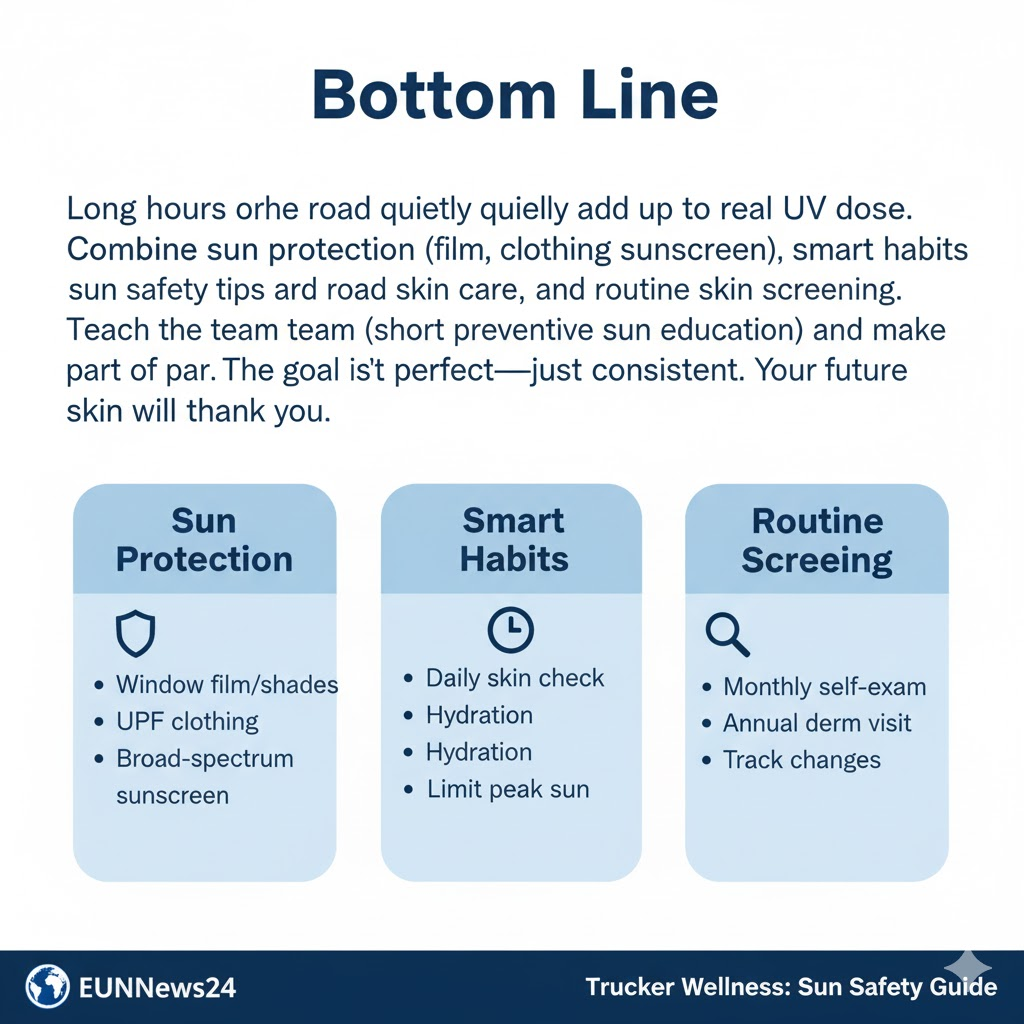
Long hours on the road quietly add up to real UV dose. Combine sun protection (film, clothing, sunscreen), smart habits (sun safety tips and on road skin care), and routine skin screening. Teach the team (short preventive sun education) and make it part of truck driver wellness. The goal isn’t perfect—just consistent. Your future skin will thank you.
Sources & evidence you can trust
- NEJM—Unilateral Dermatoheliosis case (UVA through glass; driver’s left-side damage).
- Skin Cancer Foundation—UV window film (UVA passes glass; films block ≥99%).
- WHO—UV Index & Sun protection Q&A (UVI use; SPF 30+ guidance, shade first).
- AAD—How to apply sunscreen (apply 15 min before; 1 oz; reapply q2h; lips too).
- Vehicle glass UVA data (windshield vs side windows; side often ≈70% UVA block or less; variability by model/year).
- Legal framework (UNECE R43 glazing; UK tint rules for VLT).
- Heat at work (EU-OSHA)—pair UV care with heat-illness prevention.
No responses yet